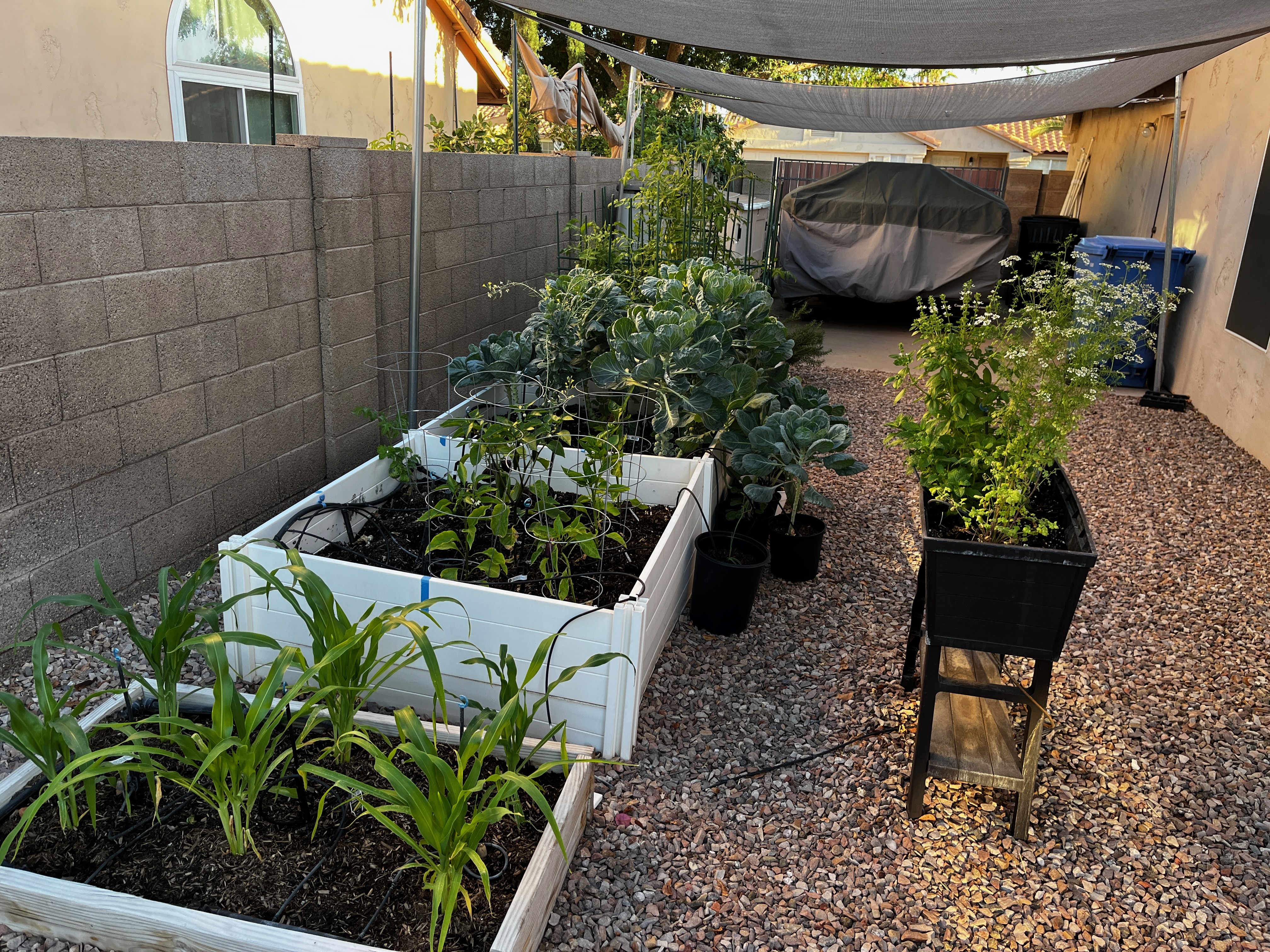
I killed a lot of plants before I figured out how to garden in Phoenix. And almost every mistake I made came down to the same root cause: I was using advice written for gardeners in completely different climates.
Most gardening resources — books, YouTube channels, seed catalogs — assume you're somewhere in the northern or eastern US where summer is growing season. In Phoenix, summer ends most gardens. The calendar is flipped. The soil is different. The heat is different. And the beginner mistakes are uniquely ours.
Here are the five mistakes I made in my first year, and what I do instead now.
Mistake #1: Planting on the Wrong Calendar
This is the big one. My first spring in Phoenix, I waited until March to plant tomatoes — because that's when I'd always planted tomatoes growing up. By the time my plants were big enough to set fruit, it was late May and hitting 100°F daily. Total loss. Zero tomatoes.
Phoenix tomatoes go in the ground in January. Not March. Not April. January. The harvest window is April and May, and plants need to be established and flowering before the heat arrives. Every week you delay planting is a week shaved off the end of your season — and the heat comes on the same schedule regardless of when you planted.
The same logic applies to the fall garden: cool-season crops go in starting in September, not October or November. By November, the best of the cool season is almost past.
Mistake #2: Planting Directly Into Native Desert Soil
In my first garden, I dug up a patch of side yard, turned it over a few times, and planted into it. The plants lived but never really thrived. They looked yellow. They produced poorly. I kept fertilizing and it didn't help much.
What I didn't understand: our native desert soil is highly alkaline (pH 7.5–8.5+), compacted, low in organic matter, and often underlain with caliche hardpan. Nutrients get locked up at high pH, so plants can't access them even when you fertilize. No amount of fertilizer compensates for a pH problem.
The solution is either significant soil amendment (compost, gypsum, sulfur to lower pH) before planting, or — my current preference — raised beds with a custom soil mix that bypasses the native soil entirely. Raised beds transformed my garden. I've never looked back.
Infinite Cedar Raised Bed Kit
Cedar naturally resists rot — a great starter raised bed that holds up well in Phoenix's dry climate. Skip the native soil entirely.
View on Amazon → Affiliate link — small commission at no extra cost to you.Mistake #3: Watering Every Day — a Little
I thought more frequent watering was better watering. So I ran my drip system for 5 minutes every day. My plants looked okay, but they were shallow-rooted and stressed. They wilted every afternoon and never built real heat tolerance.
What I learned: daily shallow watering keeps the top inch of soil wet — which is the first inch to evaporate. The roots follow the moisture and stay shallow. Shallow-rooted plants are fragile in Phoenix heat.
Deep, less frequent watering — 20–30 minutes, 2–3 times per week — pushes moisture 6–8 inches down. Roots follow it deep. Deep-rooted plants are resilient. The difference in plant performance is dramatic once you make this switch.
Mistake #4: Growing What I Wanted Instead of What Works
My first spring, I planted corn (it fell over in a monsoon-season storm), artichokes (they need years and a cool climate to produce), and sweet potatoes in a bed that got only 4 hours of sun. All of it failed.
Phoenix rewards you for working with the climate, not against it. Crops that love our dry heat — peppers, eggplant, okra, Armenian cucumber, tomatoes in their proper window — produce abundantly. Crops that want cool, humid summers — corn, most beans after May, sweet melons — struggle or fail.
I spent two seasons learning which crops genuinely thrive here before I stopped experimenting with long shots. The cheat sheet: peppers and eggplant are nearly foolproof. Tomatoes are achievable with good timing. Cool-season greens in fall are effortless. Everything else you have to learn individually.
Mistake #5: Not Mulching
This one seems small until you see the difference it makes. In my early garden, I left soil bare around plants. In April and May, that bare soil heats up to 130°F+ on the surface. Root zones stay hot. Water evaporates within hours. Plants stress out.
A 2–3 inch layer of straw mulch around plants does several things at once: insulates roots from heat, dramatically reduces evaporation, suppresses weeds, and keeps soil temperature stable. In Phoenix spring and summer, mulch is not optional — it's essential.
I now mulch every bed, every season. It's one of the cheapest and highest-return investments in the Phoenix garden.
Skip the first-year learning curve
The Desert Beginner's Starter Kit Guide covers soil prep, timing, essential tools, and the most common mistakes — everything I wish I'd had in year one. One read saves you a whole season of wrong turns.
Get the Beginner's Guide — $9The Common Thread
Every one of these mistakes came from applying advice that wasn't written for Phoenix. The calendar was wrong. The soil advice was wrong. The watering advice was wrong. Phoenix is genuinely different — not harder once you understand it, but different enough that most general gardening advice leads you astray.
The best thing you can do as a new Phoenix gardener is find resources that are specifically built for our climate. The crop guides and planting calendar on this site exist because I couldn't find that when I started, and I wanted to build what I wished had existed.
Your first season will still have failures — every gardener has them, always. But at least they'll be interesting failures, not preventable ones.