Quick Facts
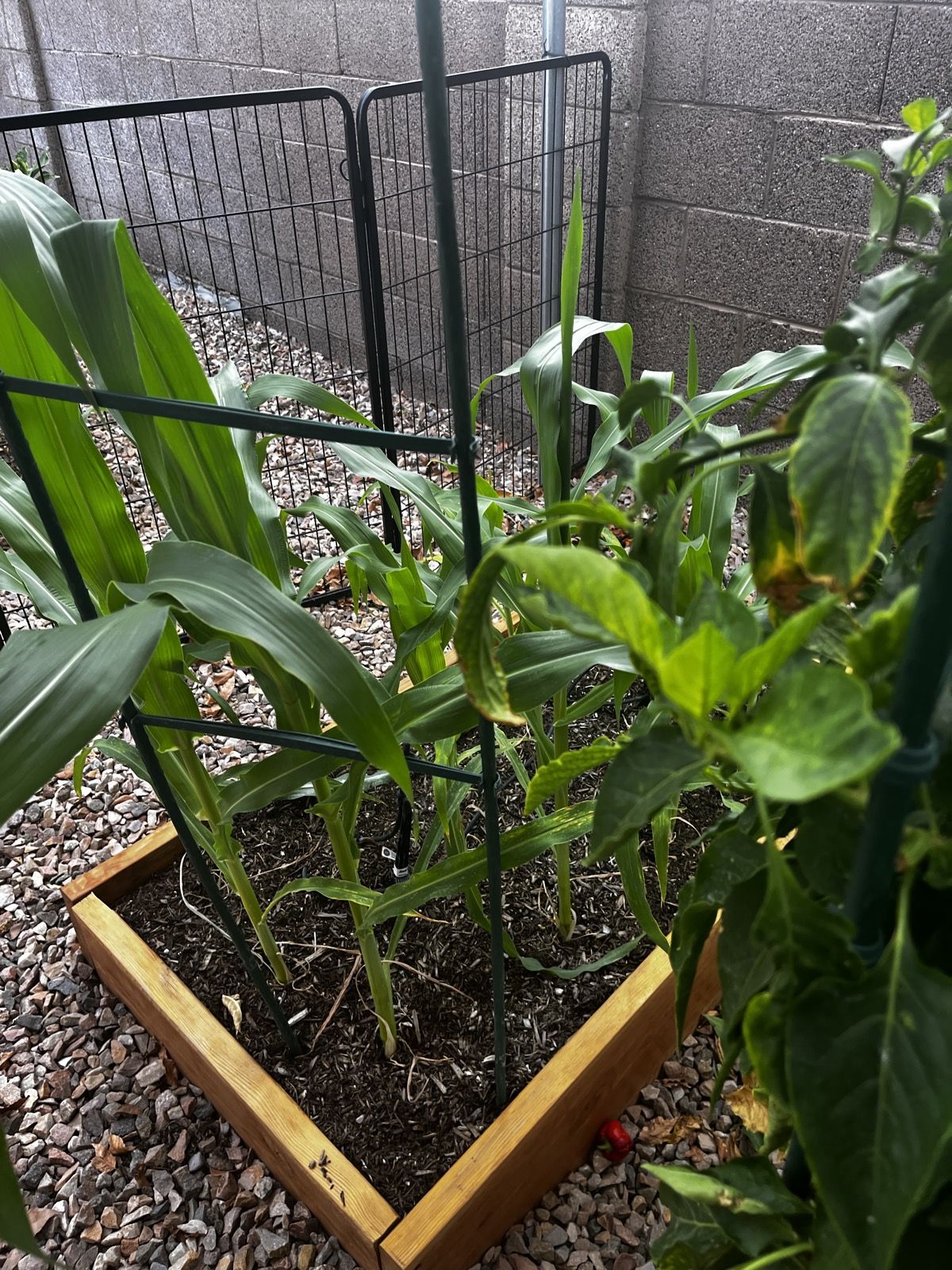
Sweet corn is one of the crops I grow in my Gilbert garden, in raised beds in spring and in planter boxes along my block wall. It takes more space, water and nitrogen than most vegetables, and the timing in the low desert is tight. But an ear picked and cooked the same afternoon tastes completely different from store corn.
The photos on this page are from my garden. The planting dates and growing advice come from University of Arizona Cooperative Extension publications, which are listed under Sources at the bottom.
When to Plant Corn in Phoenix
The Maricopa County planting calendar (AZ1005) gives sweet corn two sowing windows:
- Spring: February 15 – April 1. This is the main season. Corn sown in late February or March tassels in late April or May and is ready to pick in May or early June.
- Fall: July 15 – August 15. Seed goes into very hot soil, and young plants need steady water, but ears mature as the weather cools in October and November.
The chart lists 70–90 days to harvest. UA's Sweet Corn publication says to sow seed directly once soil is above 60°F. A soil thermometer takes the guesswork out of it. Within the spring window, earlier is generally better. UA's Ten Steps to a Successful Vegetable Garden notes that high temperatures cause poor ear fill in sweet corn, and corn that is silking in June heat often gives patchy ears.
Choosing a Variety
UA Extension notes that sweet corn varieties differ mainly in days to maturity and sugar content, ranging from about 60 to 90 days. For the Phoenix spring window, varieties in the 70–85 day range fit well. Seed packets also list a sugar type:
- Normal sugary (su): classic flavor, but sugar turns to starch quickly after picking.
- Sugar-enhanced (se): sweeter and more tender, and holds a little longer.
- Supersweet (sh2): the sweetest and longest-holding, but it needs warmer soil to germinate and should be kept apart from other types. Cross-pollination can make the kernels starchy.
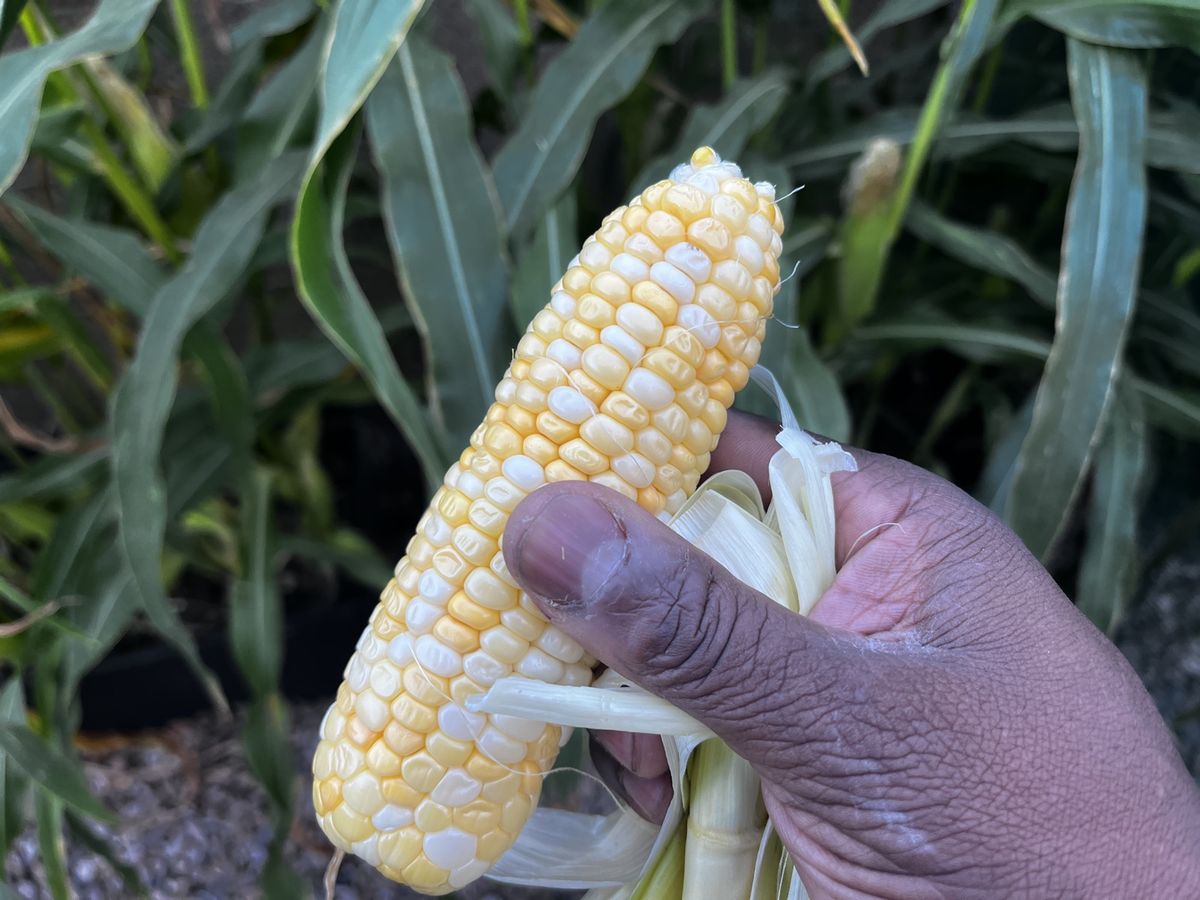
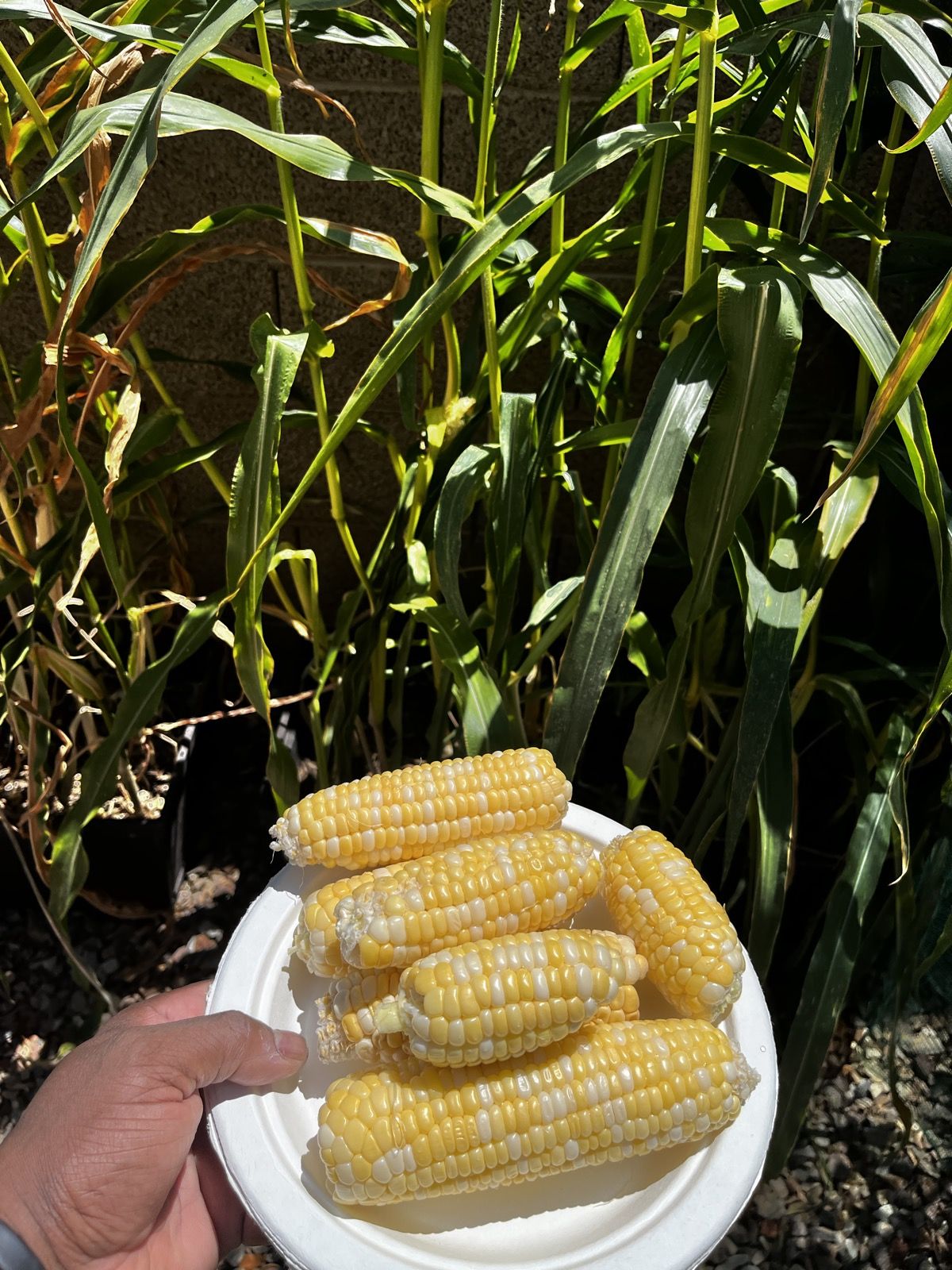
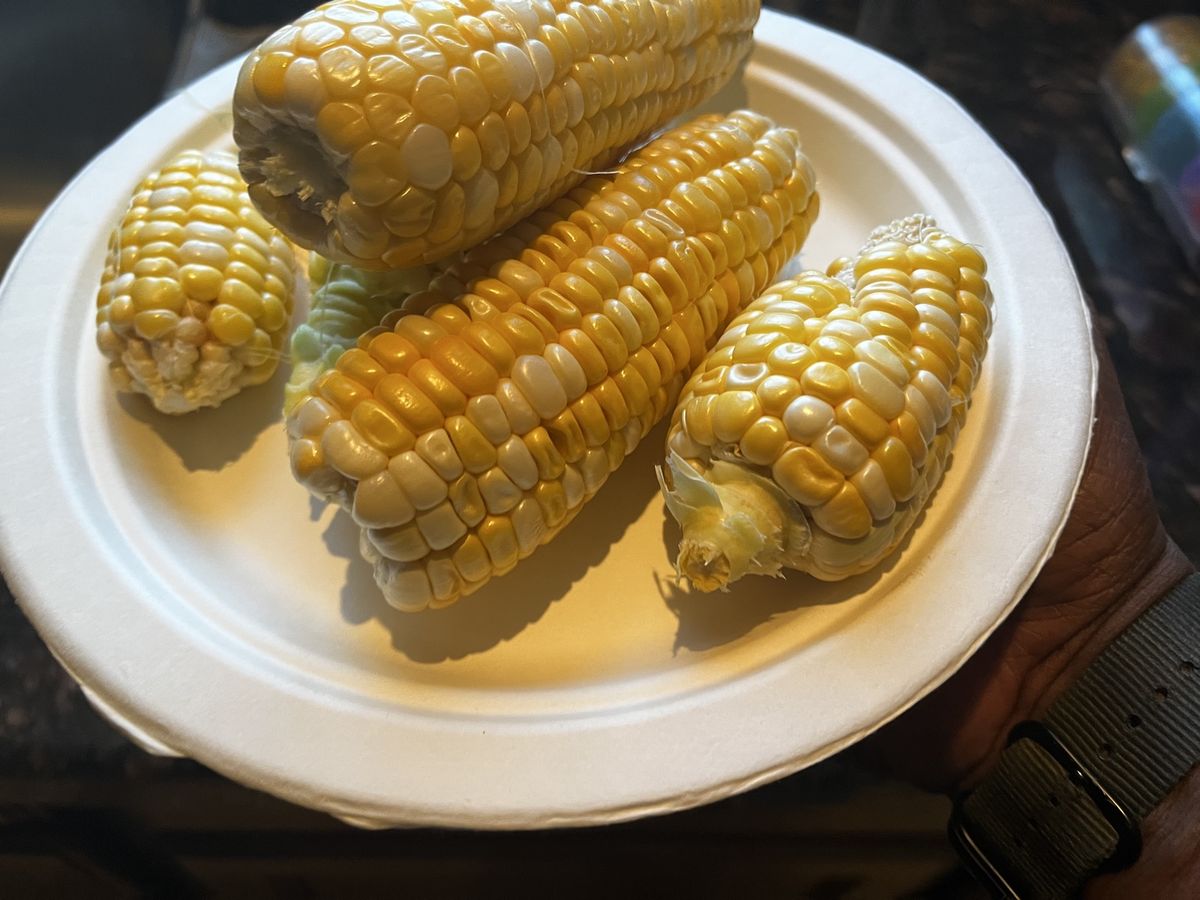
Bicolor corn (yellow and white kernels on one ear, like the ears in my photos) is available in all three types.
Plant in Blocks for Pollination
This is the most important rule with corn. Corn is wind-pollinated. Pollen falls from the tassels at the top of the plant onto the silks below, and each silk leads to one kernel. UA Extension's Sweet Corn publication says corn must be planted in a block, not long single rows, to ensure good pollination and ear development. A block of at least four short rows side by side works far better than one long row.
The UA guide recommends rows 24–30 inches apart and seeds 1–2 inches deep, 9–12 inches apart in the row. In a 4×8 raised bed, that works out to three or four short rows.
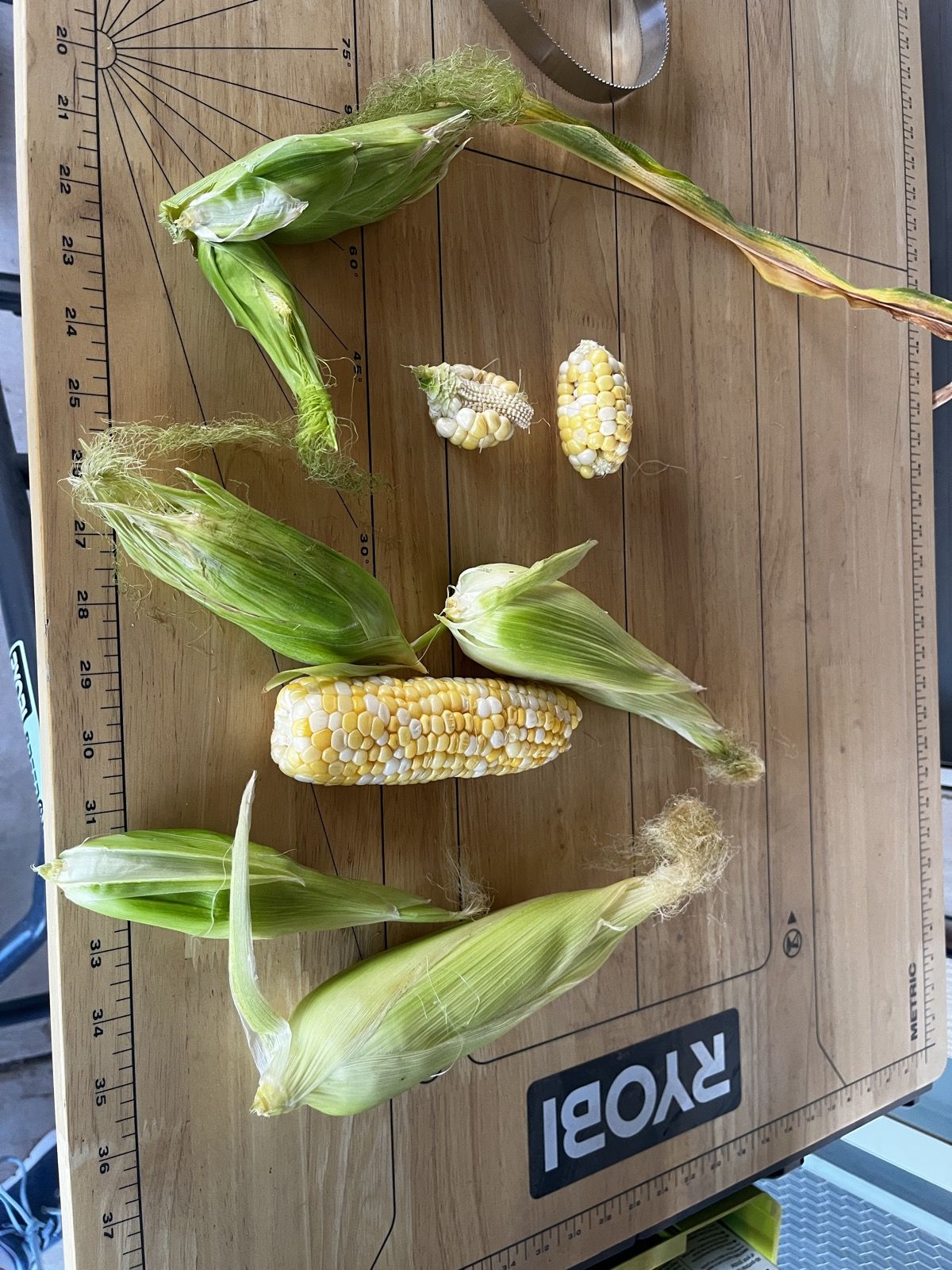
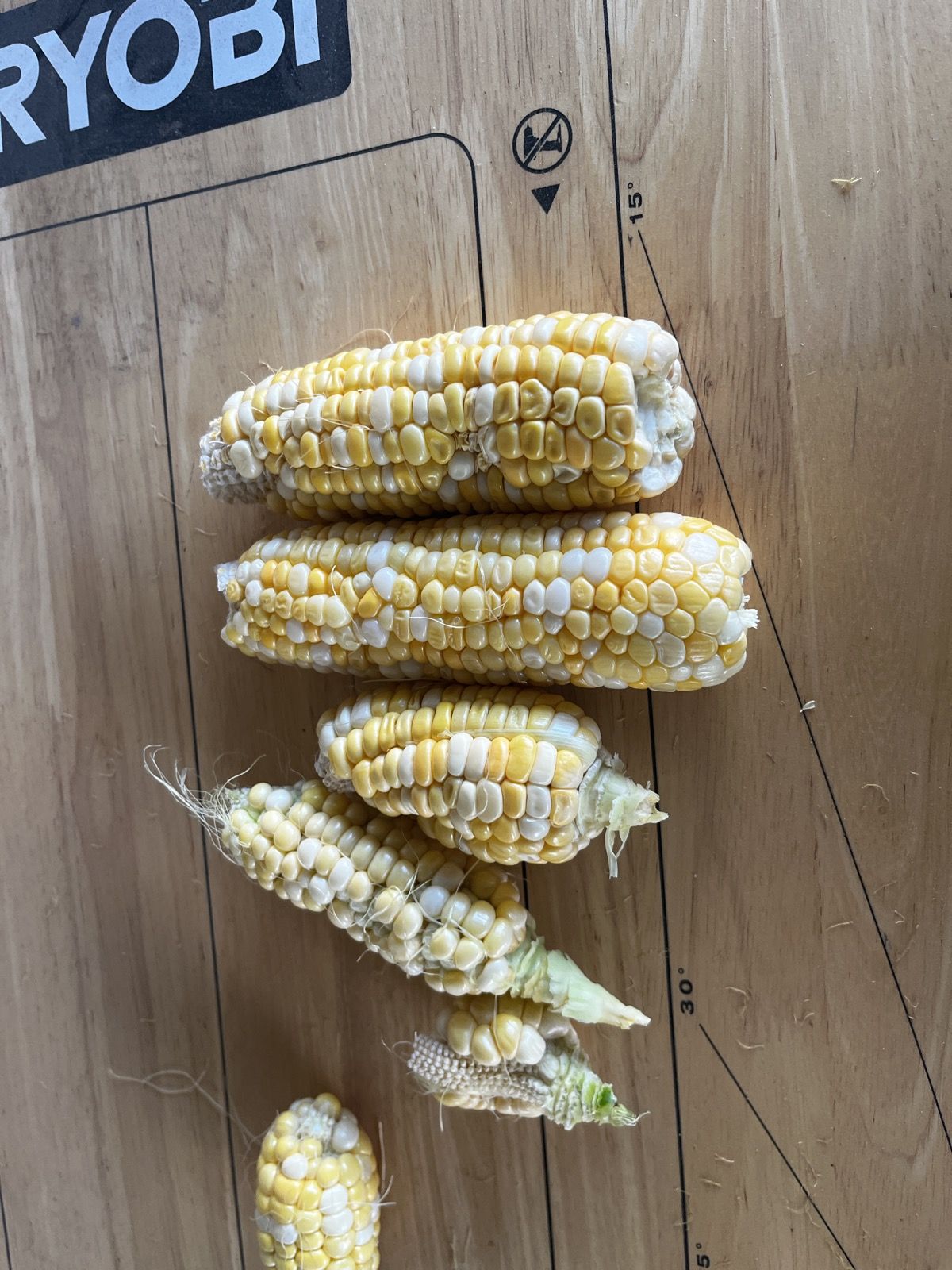
When pollination is incomplete, you get ears with missing kernels or bare tips, like some of the ears above. Small or crowded plantings, heat during silking, and drought stress at silking can all contribute. In a small garden, some people help by shaking the stalks in the morning while tassels are shedding pollen.
Soil and Fertilizer
Corn is a heavy nitrogen feeder. UA Extension describes it as needing ample water and close attention to nitrogen fertility. Before planting, amend the soil with compost and a complete fertilizer. Aged manure can also be used. Desert soil is low in organic matter, so this step matters (see amending desert soil). Many gardeners side-dress with a nitrogen fertilizer when plants are about knee-high, and again as tassels appear.
Watering
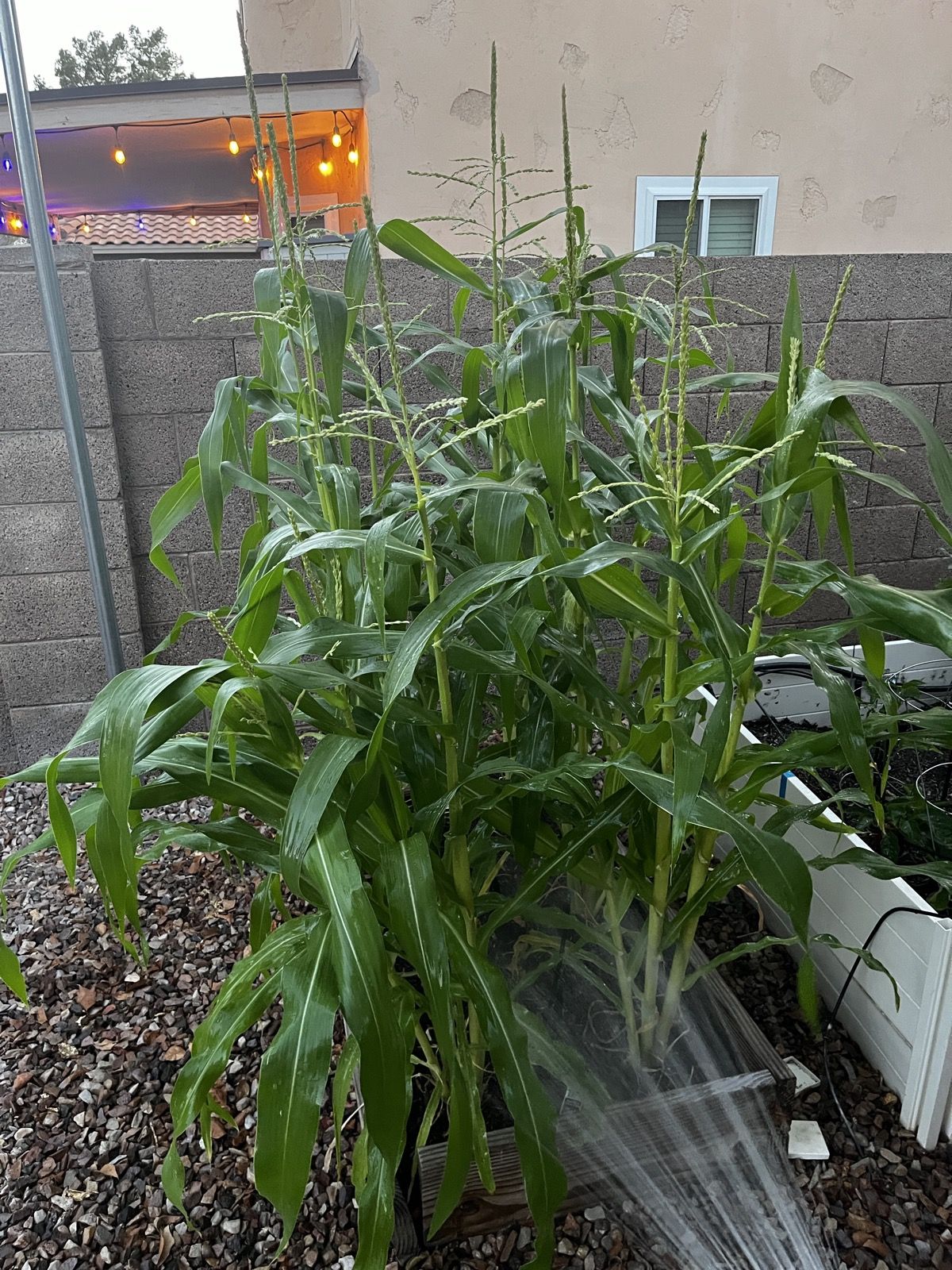
UA Extension says sweet corn needs regular irrigation throughout its growth and shouldn't be allowed to dry down significantly at any point. Water is especially critical during tasseling, silking and ear formation. In May that can mean watering daily in raised beds or containers. Deep watering with drip lines under mulch holds moisture better than overhead sprinkling. My watering guide goes through how to check soil moisture.
Growing Corn in Containers or Planter Boxes
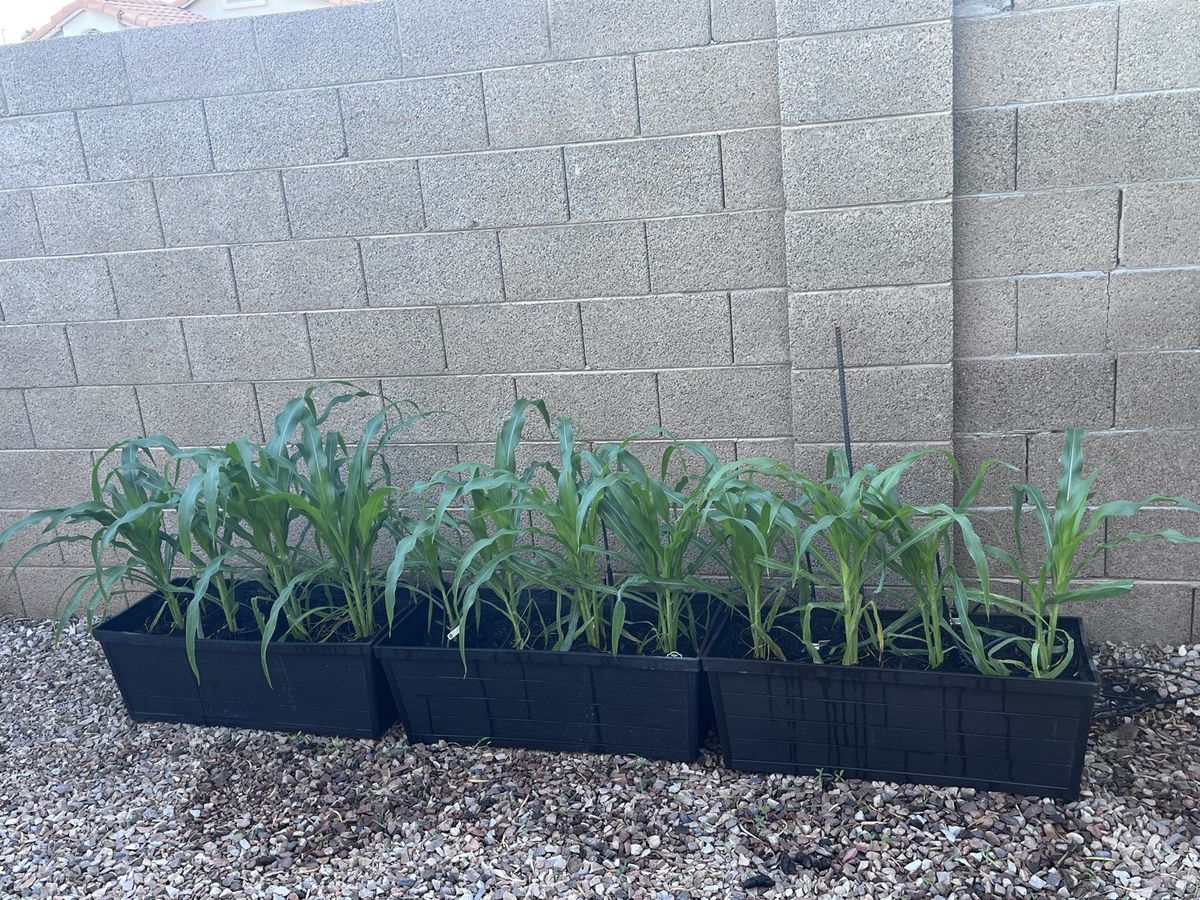
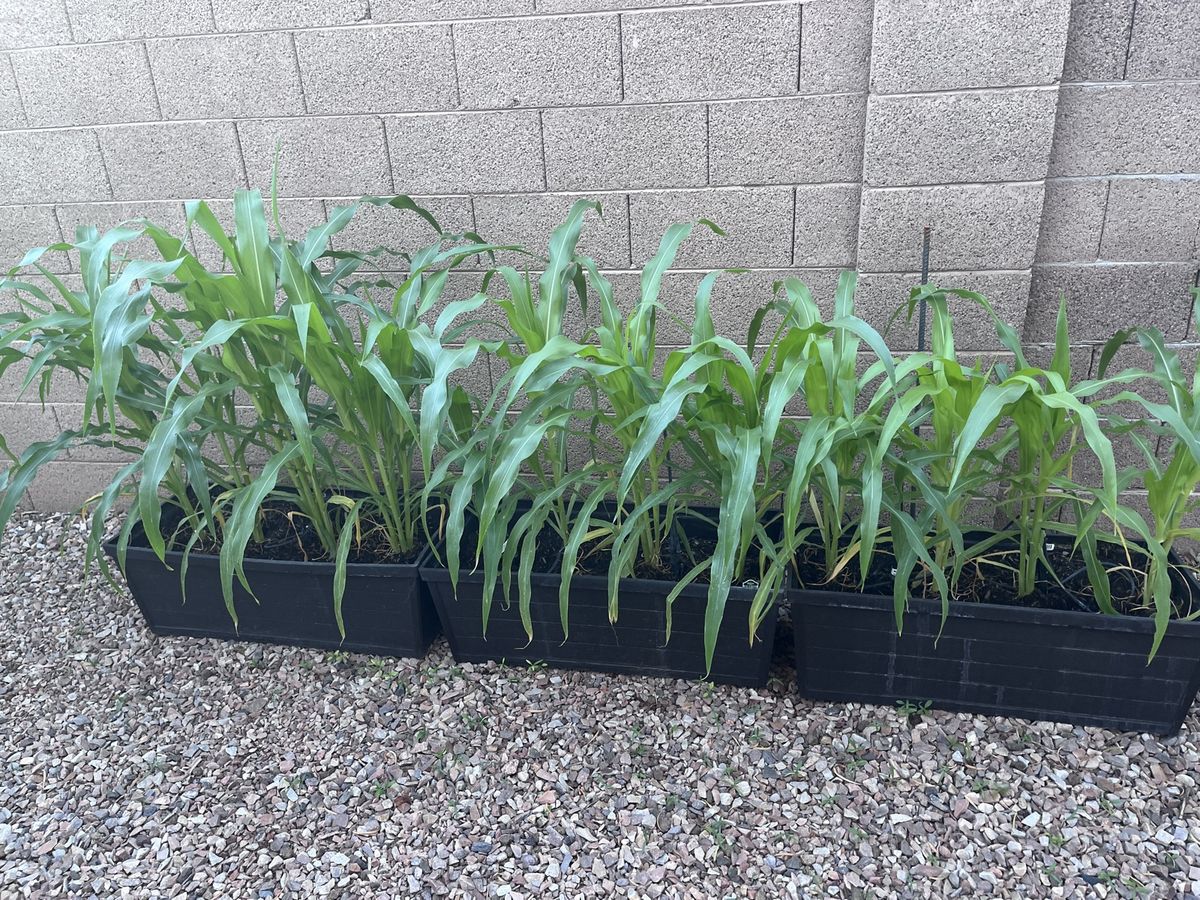
You can grow corn in large containers if you group several plants together so they can pollinate one another. Corn has a deep root system and needs a lot of water, so use the deepest containers you can and expect to water more often than you would a bed. More on that in my container gardening guide. This fall I have corn in three planter boxes along my wall.
When and How to Harvest
Sweet corn is usually ready about three weeks after the silks appear. Signs it's ready:
- Silks have turned brown and dry at the tip of the ear.
- The ear feels full and firm to the tip.
- A kernel punctured with a fingernail gives a milky juice (the "milk stage"). Clear juice means it's not ready yet. A thick, doughy paste means it's past prime.
Pick by pulling the ear down and twisting it off the stalk. Sugar starts converting to starch soon after picking, especially in normal sugary varieties, so cook or refrigerate it quickly.
Common Problems
- Gaps and bare tips on ears: poor pollination, from single-row plantings, heat or drought at silking. Plant in blocks, sow early in the spring window, and water steadily during silking.
- Caterpillars in the ear tips: corn earworm is a common pest. Damage is usually limited to the tip, which you can cut off. See Phoenix garden pests.
- Aphids on tassels and leaves: common in spring. A strong spray of water knocks them back.
- Pale, yellowing lower leaves: often a sign of nitrogen deficiency. Side-dress with nitrogen.
- Stalks blowing over: monsoon winds can flatten a fall planting. Mound soil around the base of the stalks for support.
Fitting Corn Into the Spring Garden
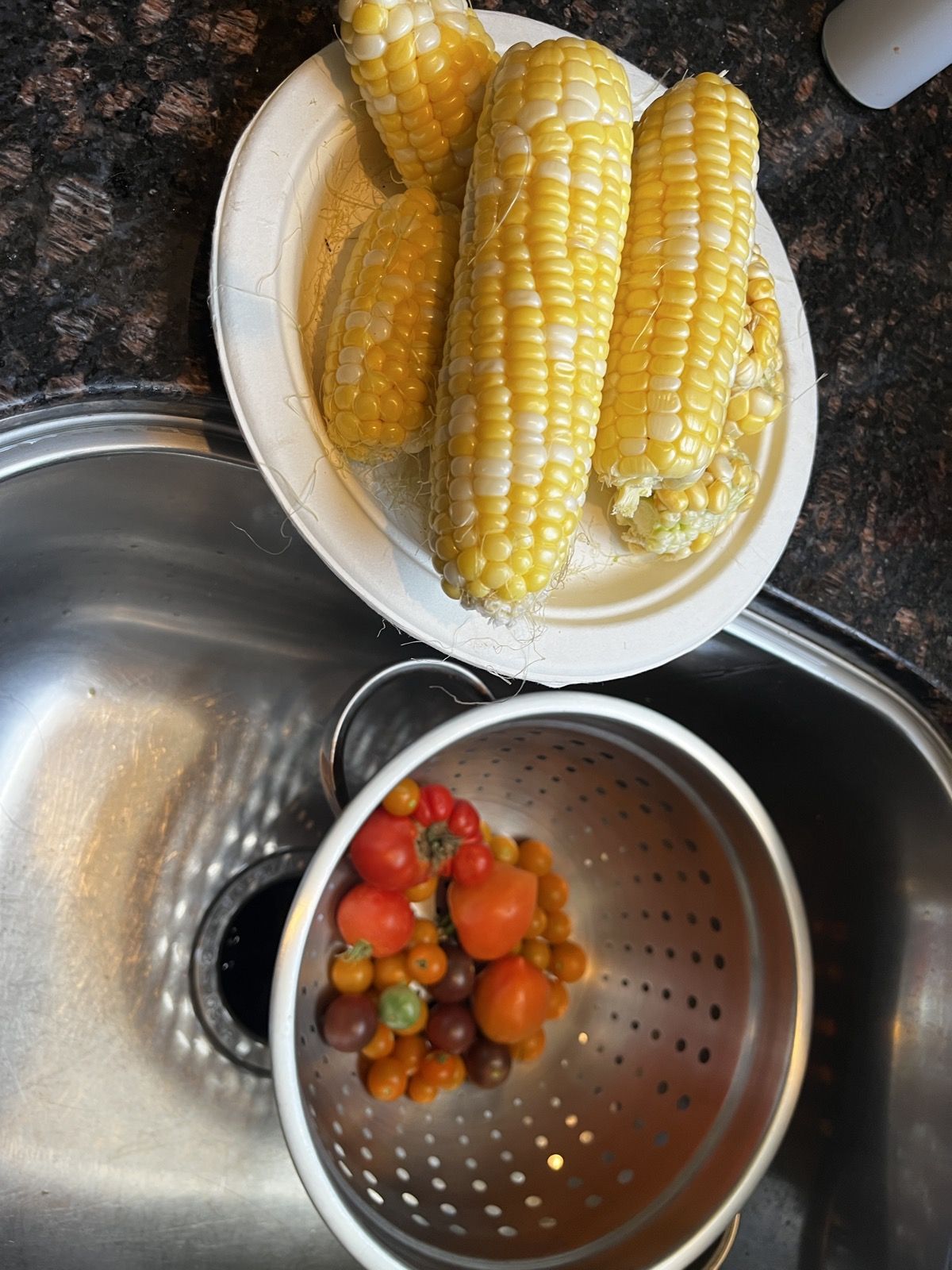
Corn goes in at the same time as tomatoes, cucumbers and squash and melons, so plan bed space in January. Plant it on the north side of the garden so the tall stalks don't shade shorter crops. For the other spring planting dates, see what to plant in February and the Phoenix planting calendar.
Frequently Asked Questions
When should I plant sweet corn in Phoenix?
UA Extension's Maricopa County calendar lists two sowing windows: February 15 to April 1 in spring, and July 15 to August 15 in fall. The spring window is the main season, and sowing early in it gives ears a chance to fill before June heat.
Why are my corn ears missing kernels?
Missing kernels and bare tips usually mean incomplete pollination. Corn is wind-pollinated, so plant in a block of several short rows instead of one long row, and keep the soil evenly moist while the plants are tasseling and silking.
Can I grow corn in a raised bed or container?
Yes. Plant several stalks together in a block so they can pollinate each other, and use the deepest container you can. Corn needs a lot of water and nitrogen, so expect to water often in warm weather.
How do I know when sweet corn is ready to pick?
Look for brown, dry silks, an ear that feels full to the tip, and milky juice when you puncture a kernel. That's usually about three weeks after the silks appear.
Sources
- Vegetable Planting Calendar for Maricopa County (AZ1005), Kai Umeda, University of Arizona Cooperative Extension, 2018 (PDF)
- Sweet Corn, University of Arizona Cooperative Extension
- Ten Steps to a Successful Vegetable Garden, University of Arizona Cooperative Extension